
RIB, Patrol Boat & Commercial Vessel Refurbishment | Landau Marine
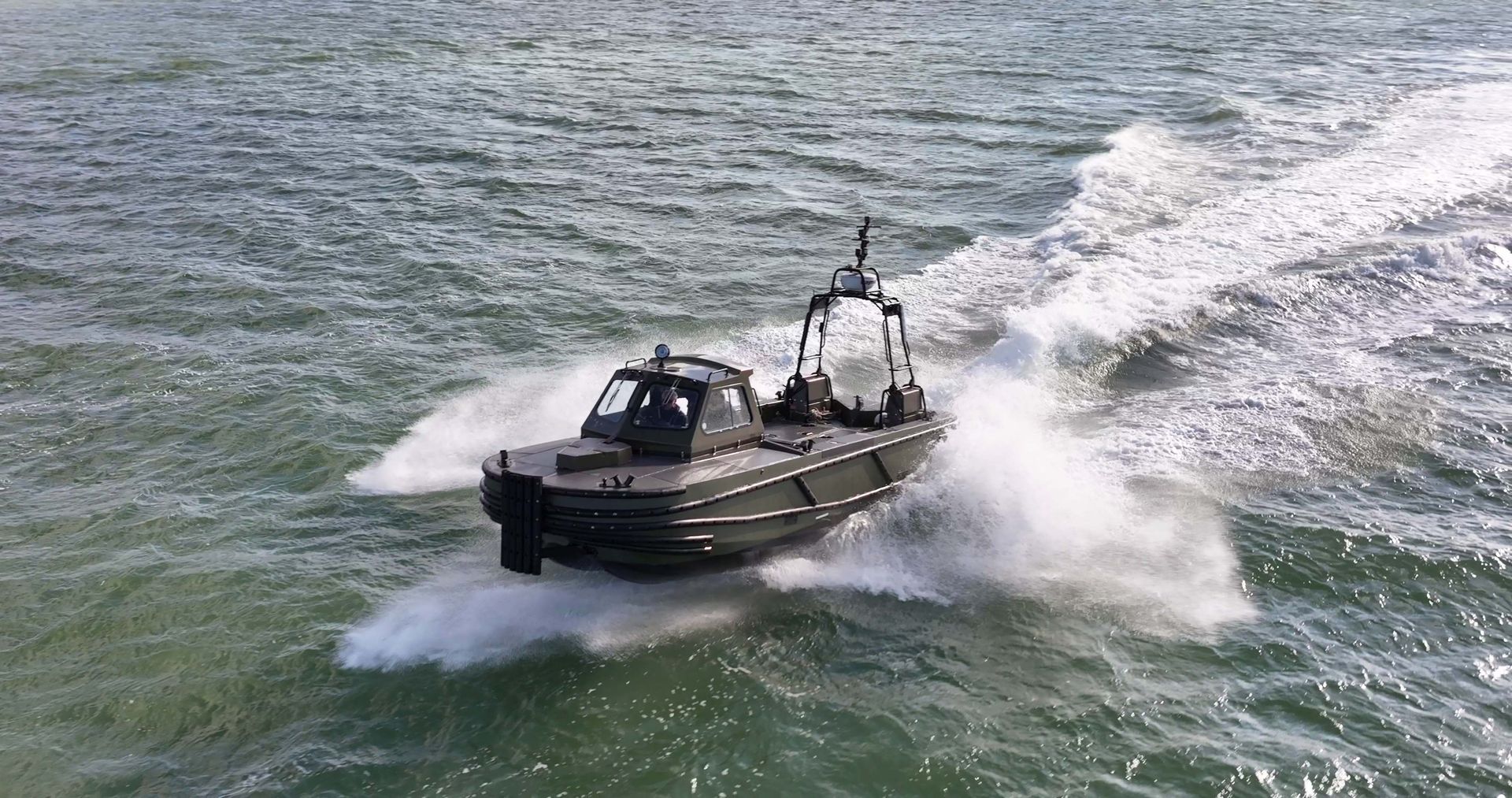
RIB, Patrol Boat and Commercial Vessel Refurbishment: Extending Operational Life and Reducing Fleet Downtime
For organisations such as Border Force, the Royal Navy and commercial maritime operators, vessel reliability is fundamental to maintaining operational capability.
Whether a vessel is involved in border security, defence operations, maritime surveillance, emergency response or commercial activities, unexpected downtime can have serious consequences. A vessel that cannot be deployed when required represents more than an engineering problem. It can disrupt operational planning, reduce fleet availability and increase costs.
At Landau Marine, we understand these challenges through our practical experience repairing, maintaining and refurbishing high-speed RIBs, specialist naval craft, autonomous vessels and commercial boats.
Our experience includes working on Pacific RIBs, specialist Royal Navy vessels and autonomous craft through work associated with NavyX, now part of DCTO. This work extends beyond routine maintenance to electrical installations, propulsion and drive systems, structural repairs and wider vessel refurbishment.
We provide marine engineering, repair, refurbishment and life-extension services for RIBs, patrol boats and commercial vessels up to 24 metres, helping operators maintain existing assets, improve reliability and reduce avoidable downtime.
Our approach is straightforward: identify problems early, provide sound engineering advice and deliver practical solutions that return vessels to service safely and efficiently.
Specialist Marine Engineering Experience with Royal Navy and DCTO (Formerly NavyX) Vessels Working on Pacific RIBs and Specialist Naval Craft
High-speed RIBs and specialist patrol vessels operate in some of the most demanding marine environments.
Their propulsion systems, electrical installations, hull structures and onboard equipment are subjected to vibration, repeated impacts, saltwater exposure and significant mechanical loads.
Landau Marine has undertaken refurbishment work on numerous Pacific RIBs and other specialist craft associated with Royal Navy and Special Forces operations.
These projects have given our engineers practical experience of the challenges involved in maintaining vessels where reliability and operational readiness are particularly important.
Our experience in this specialist area is further demonstrated by our previous NavyX Small Boats Support contract, which included servicing and maintenance support for the Royal Navy's MADFOX and APAC24 autonomous vessels.
Our work is not limited to cosmetic refurbishment or routine servicing. We undertake engineering work involving propulsion systems, electrical installations, drive systems and structural components.
This experience is relevant to a wide range of operational vessels, from high-speed RIBs to larger patrol boats and commercial craft.
Experience Supporting DCTO (Formerly NavyX) and Autonomous Vessel Technology
The development of autonomous and uncrewed vessels is introducing new requirements for marine engineering and maintenance.
These craft combine traditional vessel systems with increasingly sophisticated electrical, propulsion and control technologies.
Landau Marine has undertaken engineering work on high-speed autonomous vessels, including electrical installations and the installation of propulsion and drive systems.
Our experience also includes maintaining an autonomous Pacific RIB through work with NavyX, now known as DCTO, supporting the Royal Navy's development of specialist maritime capabilities.
Working with these specialist vessels requires an understanding of both conventional marine engineering and the additional technical demands associated with autonomous systems.
Landau Marine's technical involvement in this evolving sector is also reflected in our maritime autonomy partnership with Robosys Automation, announced at DSEI, which brought together marine engineering and autonomous navigation technology for naval and retrofit applications.
As autonomous technology becomes increasingly important to defence, maritime security and commercial operations, dependable engineering support will remain essential to maintaining vessel reliability.
Applying Naval Engineering Experience to Border Force and Commercial Fleets
Many of the engineering challenges encountered on specialist naval vessels are equally relevant to Border Force patrol boats and commercial workboats.
These include corrosion, structural deterioration, electrical faults, propulsion system wear and the need to maintain vessels that may be required for deployment at short notice.
For Border Force and other government agencies, the availability of operational craft can directly affect the ability to fulfil essential duties.
Similarly, commercial operators depend on reliable vessels to maintain services, meet contractual commitments and avoid costly interruptions.
Our experience with naval RIBs, autonomous craft and specialist marine engineering provides a strong technical foundation for supporting these organisations with planned maintenance, refurbishment and vessel life-extension programmes.
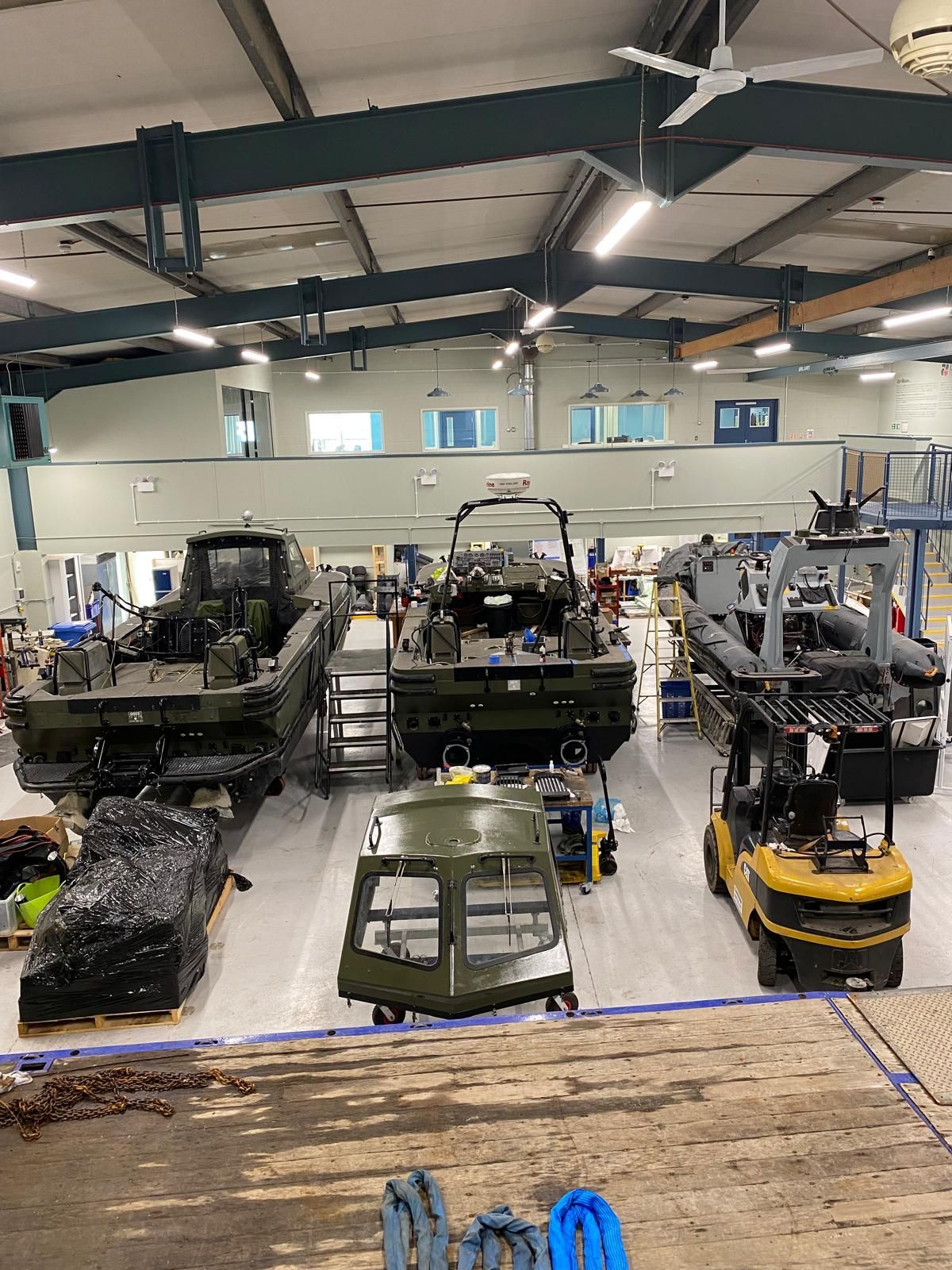
The Most Common Problems Affecting High-Speed RIBs and Commercial Vessels
Understanding why vessels deteriorate is one of the most important steps towards extending their operational life.
In our experience, many serious engineering problems develop gradually. What begins as a relatively minor defect can become a significant repair if it is not identified and addressed.
For operators managing RIBs, patrol boats and commercial vessels, early intervention can reduce costs, prevent more extensive damage and improve operational availability.
Corrosion and Inadequate Cathodic Protection
One of the most common problems we encounter involves vessels that remain in the water for extended periods.
Corrosion can be particularly significant around propulsion systems, including waterjets and outdrives, where aluminium components may be connected to other metals.
Aluminium is relatively anodic compared with many other metals used in marine engineering.
When dissimilar metals are electrically connected in seawater, galvanic corrosion can occur. Without appropriate cathodic protection, this can lead to severe pitting and deterioration of important components.
In some cases, what initially appears to be minor corrosion can develop into damage requiring extensive repair or replacement.
For operators, regular inspection of underwater components should be an important part of preventative maintenance.
Particular attention should be given to:
- Sacrificial anodes and cathodic protection systems.
- Waterjets, outdrives and underwater propulsion components.
- Connections between dissimilar metals.
- Early signs of pitting or material deterioration.
- The condition of underwater fittings and associated equipment.
Our view is that preventing corrosion is almost always preferable to dealing with the consequences once significant damage has occurred.
Structural Damage and Delamination
High-speed vessels experience considerable structural loading, particularly when operating in heavy weather.
Repeated wave impacts, vibration and hull flexing can place substantial stress on composite structures.
Over time, these forces may contribute to delamination, where layers within a composite structure begin to separate.
The challenge is that structural damage is not always immediately visible.
A vessel may appear serviceable while underlying damage continues to develop.
For patrol boats, high-speed RIBs and commercial craft operating in demanding conditions, regular structural inspections are therefore essential.
Identifying damage early allows engineers to assess its extent and determine whether a targeted repair or more substantial refurbishment is required.
Electrical and Wiring Problems
Electrical faults are another common source of vessel reliability problems.
Marine electrical systems are exposed to saltwater, moisture, vibration and demanding operating conditions.
Over time, these factors can contribute to the deterioration of wiring, connectors and associated components.
Intermittent electrical faults can be particularly difficult to diagnose because they may not appear consistently during routine testing.
Our experience with electrical installations on specialist naval and autonomous vessels reinforces the importance of investigating the complete system rather than simply replacing individual components.
A thorough assessment can help identify the underlying cause of a problem and reduce the likelihood of recurring failures.
Fuel Degradation in Infrequently Used Vessels
One issue that is sometimes overlooked is the effect of leaving vessels unused for extended periods.
This is particularly relevant to reserve craft, specialist patrol vessels and boats that may be required at short notice but are not operated regularly.
Both petrol and diesel fuels can deteriorate during storage.
Diesel systems may develop microbial contamination, commonly known as diesel bug, particularly where water is present.
This can lead to blocked filters, fuel contamination and engine reliability problems.
Petrol can also deteriorate, with certain fuel blends susceptible to phase separation and changes in performance characteristics over time.
For operational vessels, discovering a fuel-related problem when the craft is needed for deployment can have significant consequences.
We believe fuel condition and fuel system maintenance should form an important part of planned maintenance programmes, particularly for vessels that spend considerable periods out of service.
Repair or Replace? Making the Right Engineering Decision
Almost Anything Is Repairable – But Is It Economically Viable?
One of the most important decisions facing vessel operators is whether to repair an existing component or replace it.
From an engineering perspective, almost anything can be repaired.
However, technical feasibility does not automatically mean that repair is the most sensible option.
At Landau Marine, we consider the economic, operational and safety implications before making a recommendation.
If the combined cost of refurbishment, parts and labour exceeds the cost of replacement, fitting a new component may represent better value.
Equally, there are situations where repairing an existing component is entirely appropriate and avoids unnecessary expenditure.
For organisations managing established fleets, this approach can help control maintenance costs while extending the useful life of existing assets.
Safety Must Always Take Priority
Cost is an important consideration, but safety must remain the overriding factor.
Where a component has deteriorated to the point that continued use could compromise vessel safety, the decision cannot be based on price alone.
We also consider manufacturer warranties, component availability and the customer's maintenance and procurement policies.
Some organisations operate under specific procurement restrictions, while others have defined financial or operational requirements.
Our recommendations consider:
- Vessel safety and operational reliability.
- The cost of repair compared with replacement.
- The expected remaining service life of the component.
- Manufacturer warranties and technical support.
- Customer procurement policies and budget constraints.
- The time required to return the vessel to service.
Our role is to provide practical engineering advice that balances safety, reliability, cost and operational requirements.
Extending the Operational Life of RIBs, Patrol Boats and Commercial Vessels
Why Refurbishment Can Be a Practical Alternative to Replacement
Replacing a specialist patrol boat, high-speed RIB or commercial vessel can represent a substantial financial commitment.
For organisations operating established fleets, a carefully planned refurbishment programme may offer an opportunity to extend the useful life of existing assets without immediately committing to replacement.
Depending on the vessel's condition, refurbishment may involve work on propulsion systems, electrical installations, structural components and other essential equipment.
The key is understanding whether the vessel remains technically and economically suitable for continued operation.
At Landau Marine, we believe refurbishment should focus on addressing the issues that genuinely affect safety, reliability and performance.
The objective is not simply to carry out more work. It is to ensure that the investment delivers meaningful operational benefits.
A practical example of this approach can be seen in our Mexeflotes refurbishment project, where extensive corrosion, damaged structural components and deteriorating surfaces were addressed through engineering repairs, replacement components and protective coating systems. The project demonstrates how targeted refurbishment can restore the condition and operational usefulness of existing military marine assets.
Identifying Problems Before They Cause Delays
One of the greatest challenges in vessel refurbishment is discovering unexpected defects after work has already begun.
These problems can increase costs, disrupt schedules and delay the return of a vessel to service.
This is why we place considerable emphasis on detailed initial surveys.
Before committing to a major refurbishment programme, we aim to identify as many potential problems as possible.
This allows us to establish a realistic scope of work, allocate resources and develop an achievable project schedule.
Although unforeseen issues can occasionally arise, identifying problems early significantly reduces the risk of disruption.
For organisations managing operational fleets, this approach can help make maintenance periods more predictable.
Managing Multiple Vessel Refurbishments and Minimising Downtime
Scaling Engineering Resources to Match the Project
The ability to allocate the right engineering resources is an important part of successful vessel refurbishment.
Landau Marine has access to a substantial pool of employees and specialist subcontractors, including a network of up to 60 available contractors.
This provides flexibility when managing larger projects or multiple vessels requiring work.
However, effective resource planning is not simply about assigning more people to a project.
The number of engineers who can work efficiently aboard a vessel depends on its size, layout and the nature of the work.
For example, on a vessel of approximately 15 metres, having more than four engineers working aboard simultaneously can become counterproductive because of the available space.
Larger vessels and different project requirements allow for alternative staffing arrangements.
Our approach is to allocate resources according to the specific requirements of each vessel, ensuring work can be carried out safely, efficiently and without unnecessary delays.
Capacity to Work on Up to 12 Vessels Simultaneously
Depending on the nature and scale of the work, Landau Marine has the capacity to work on up to 12 vessels simultaneously.
This capability is particularly relevant to organisations managing fleets of patrol boats, RIBs and commercial craft.
Rather than treating every vessel as an isolated project, we can coordinate resources and schedules across multiple refurbishment and maintenance programmes.
This helps operators plan vessel availability and manage periods when several craft require engineering attention.
Detailed Scheduling – Down to the Day and Hour
A successful refurbishment programme depends on more than engineering expertise.
It also requires disciplined project management.
At Landau Marine, we have developed a detailed scheduling approach that breaks work down by individual days and hours.
This enables us to monitor exactly what needs to be completed, when it must happen and which resources are required.
Our scheduling process helps us manage:
- The sequence of engineering tasks.
- Workforce and specialist contractor allocation.
- Progress against agreed milestones.
- Dependencies between different stages of work.
- Potential issues that could affect completion dates.
This level of planning is particularly important because some customer contracts include financial penalties for late delivery.
For us, meeting an agreed completion date is both a contractual responsibility and an essential part of providing a reliable service.
When we commit to a schedule, our intention is to meet it, subject to genuinely unforeseen circumstances.
Wherever possible, we aim to deliver ahead of customer expectations.
Reducing Downtime Through Early Inspection and Planning
For Border Force, defence organisations and commercial operators, the time a vessel spends out of service can be as important as the cost of the work itself.
A vessel undergoing refurbishment is temporarily unavailable for its intended duties.
Our objective is therefore to minimise unnecessary downtime through detailed surveys, realistic scheduling and effective resource allocation.
By identifying potential problems at the beginning of a project, we can reduce the likelihood of unexpected defects disrupting the programme.
Combined with structured project management and access to specialist engineering resources, this approach helps us work towards dependable return-to-service dates.
What Border Force, Defence and Commercial Operators Should Expect from a Vessel Refurbishment Partner
Choosing a vessel refurbishment partner involves more than comparing quotations.
For organisations operating patrol boats, high-speed RIBs and commercial vessels, engineering capability must be supported by an understanding of operational requirements.
Based on our experience, we believe several factors are particularly important.
Relevant Experience with Operational Vessels
Experience with recreational craft does not necessarily demonstrate an understanding of the demands placed on operational vessels.
High-speed patrol boats, specialist naval RIBs and commercial workboats may operate under very different conditions and maintenance requirements.
Relevant experience with propulsion systems, composite structures, electrical installations and specialist vessel technology can be particularly valuable.
Landau Marine's work involving Pacific RIBs, specialist Royal Navy craft and autonomous vessels through its previous work with NavyX (now DCTO) provides practical experience in these areas.
Clear and Practical Engineering Recommendations
Operators should expect straightforward advice about whether components should be repaired or replaced.
Recommendations should be based on safety, technical suitability, cost and expected service life.
Unnecessary replacement increases expenditure, while inappropriate repairs can create reliability and safety concerns.
A good engineering partner should be able to explain the available options and recommend a practical course of action.
Realistic Project Scheduling
A refurbishment partner should be able to explain how work will be planned, what resources are available and how progress will be monitored.
For operational fleets, the agreed return-to-service date can be just as important as the engineering work itself.
Detailed scheduling and early identification of potential problems are essential to reducing avoidable delays.
Understanding Operational Readiness
A Border Force patrol boat, Royal Navy RIB or commercial workboat is not simply an asset requiring maintenance.
It is a vessel that may be essential to the organisation's day-to-day operations.
Its value depends on being safe, reliable and available when required.
We believe refurbishment and maintenance decisions should always reflect that operational reality.
Supporting the Future of Naval, Border Security and Commercial Vessels
The requirements placed on operational vessels continue to evolve.
High-speed RIBs and patrol boats remain essential to maritime security, defence and commercial activities, while autonomous and uncrewed vessels introduce additional engineering and maintenance considerations.
Through our experience working with specialist naval craft and autonomous vessels associated with NavyX (now DCTO), Landau Marine has developed practical knowledge relevant to both established and emerging maritime technologies.
At the same time, many of the fundamental engineering challenges remain unchanged.
Corrosion, structural fatigue, electrical reliability, propulsion maintenance and fuel condition will continue to influence vessel performance and service life.
Our view is that successful vessel life extension depends on combining technical expertise with sound engineering judgement, detailed inspections and disciplined project management.
For organisations such as Border Force, the Royal Navy and commercial fleet operators, this approach can help maintain operational capability while making better use of existing marine assets.
Talk to Landau Marine About Vessel Repair, Refurbishment and Life Extension
Landau Marine provides specialist marine engineering, repair, refurbishment and vessel life-extension services for RIBs, patrol boats and commercial vessels up to 24 metres.
Our experience includes Pacific RIBs, specialist Royal Navy craft, autonomous vessels and high-speed marine engineering projects.
From electrical installations and propulsion work to structural repairs, corrosion management and planned refurbishment programmes, our focus is on delivering practical engineering solutions that support safety, reliability and operational readiness.
With access to a substantial specialist workforce, the capacity to manage multiple vessel projects and a detailed approach to scheduling, we understand the importance of returning operational craft to service when promised.
Whether you operate a single specialist RIB, manage a fleet of patrol boats or are responsible for maintaining larger commercial vessels, we can discuss a repair or refurbishment programme tailored to your requirements.
Contact Landau Marine to discuss your vessel repair, refurbishment or life-extension requirements.


